Monday, January 10, 2011

Are You Being Served?


It's very likely that you're not.  Few are these days.


Some of the shows I watched as a 10 year old, I still love today.  Perhaps if we had more Magnum/Higgins and Capt. Peacock/Mr. Humphries on television, style would be a bit different.  As much as I try to avoid waxing nostalgic on the ol' blog, I can't resist certain elements.  Netflix has available the DVD's for Are You Being Served?, and they are as dry, lovable, and hilariously steady as I had remembered.  Of course, the show had its own spin-off, (Are You Being Served? Again!) which still contained the great core-shenanigans, double entendre, and predictable and awkward angles of the first, with more than a hint of the sad, salvaging desperation of a spin-off.  Despite the painfully accurate send-up of Anglo status-consciousness and the paranoia of class anxiety (including corporate hierarchy) the clothing was a bizarre time-capsule of an era that ended just as that show began.

Class-anxiety transcending friendship, and occasionally, vice-versa.


Frank Thornton's character, the perpetually fuss-veneered Capt. Peacock, wore the exact same assembly every day (including the stroller), and the flower was "purchased daily at [his] own expense".  However, when they left London to reside in the countryside, the cast shifted into various strata of country clothing.*  

Here, Capt. Peacock's "country suit" is fantastic, and still more formal than the majority of city suits seen today in the US.

When the entire floor was required to participate in ballet to foster health and fitness, the ever status-anxious Capt. Peacock showed up in black tights, a rugby shirt (thankfully untucked) and an ascot, shooing all but his superior from his warm-up bar which was "reserved for management only".

I  always enjoyed the original (including the early black and white), and noted even then how Mr. Humphries would pin his tie under his vests/waistcoats to lift it, creating a subtle convex display.  While some of the wardrobe cuts are outdated, the overall mode is as permanent as can be, and the show represents the end of an era (both good and bad), serving as a snapshot for the (possibly last) moments that Anglo and American culture teetered on a coal-fired, leather-soled, presentation-at-all-costs era. 

*To avoid a larger post, the "city vs. country" rule for clothing is largely irrelevant in the States, considering that a country Prince Of Wales Check suit with a blue shirt, spotted or noun tie, and brown shoes will still leave the wearer more formal than nearly all of those in most US cities.

Monday, January 3, 2011

New Years Emails

Dear Sir,
We hosted a party in our first apartment together for new years eve. We were roommates in college and wanted to throw something nice and have a good time with other friends and even people from work, we were pretty open about the invitation and welcomed anybody. A very handsome dressed guy -grad student- had a silk pocket square, tie, and a heavy charcoal color wool suit that looked great and I think he was a friend of a friend. We served wine and mix drinks and beer. 

[Photos were attached here, and very charming descriptions of what a lot of the men were wearing]

It was a really great party and the most fun NYE!

[After more descriptions, the final paragraph]

The guy in the really nice suit said that he only drinks micro-brews or scotch and did we have any.  We were both sorry to say no that we didnt. We had [Bud and Bud Lite] which everyone liked. We realized that we should set up a small bar for future parties and wanted to know what we should by for well dressed gentlemen.


Addie and Sarah,
Atlanta, GA


Dear Addie and Sarah,
You threw a perfectly elegant party.  Your first apartment looks charming, and judging by the photos, everybody was at ease and you were great hostesses.  As for the well-dressed young man there and his disdain for what you offered him, you should see that he is never invited back.  He is an ass.


Happy 2011 to you both!


P.S. I will have a post about setting up a bar for a party soon.

*********

Y-W-P,
Happy New Year! My older sister is getting married in April in Chapel Hill inside at night and I want to know if I should wear the blue suit or the gray suit? . I am single and she has tons of single girlfriends.
 [photos of each suit were attached along with a link to the venue]


C.
Raleigh, NC


Dear C.,
You should wear whatever suit will be the most comfortable for sitting, eating, dancing, and then draping over the shoulders of the young lady with whom you stroll outdoors for fresh evening air. The daffodils are likely to be poking through then in North Carolina, so be sure to pick one for her during your stroll, and offer her your arm. 

[...]

-Y-W-P

*********

What is Really Worn - Behind The Curtain's (Social) Fabric

Writer's Note: This post is largely in response to several emails I received containing angry and near-dogmatic understandings of the importance of dressing.  Most of these partially venomous screeds theorized correlation between tie and pocket square wearing to some non-existent ghost of "the Gentleman", with a naive impatience for those who conduct themselves differently.  While I love finding, buying, wearing, and thinking, talking, writing, and reading about more formal clothing, I do prefer to keep it in perspective.  The beauty of the human soul and spirit are quickly consumed when devoted to keeping one's outward self alight, leaving the eyes window to a spent and desolate core wrapped in a fussed-over presentation of grooming and bother.  

 ******

Catalogs, websites, blogs, commercials, and television would like us to think that worlds exist where the aesthetic is unblemished,  the mood is just so, and people dress to the most picturesque end of the spectrum as possible each moment of the day.  In reality, there are no set-designers to provide rich low lighting to walnut panels, no costume designers to bulldog clip the waist of the jacket to give it a drinking-straw taper, and no casting directors to ensure that the event will be filled with tall slender/chiseled models to provide the cocktail chit-chat which we imagine they are capable of.  If you watch television or go to the movies, you will be certain, CERTAIN, that the intelligence apparatus of each federal (or even state) agency is staffed by models who dress well and gaze analytically at state-of-the-art technology with desks and floors that are modern and back-lit.  In reality, desks, computers, filing cabinets and coat racks are all purchased from the near-lowest bidder on a commercial procurement, which until recently, had largely remained stagnant with Steelcase-type furnishings and fluorescent lighting.  Only recently have our federal agencies allowed themselves a much-needed and well-deserved sprucing up, with windows, carpeting, and  more human lighting, finally bidding farewell to the remaining 70's/80's furniture and style that certainly provided no dignity to its users. 
 
While the college experience is available to more people now than ever, the myth of the heavily tweeded and flanneled bow tie academic may be dying somewhat, and we no longer expect to see cardigans under herringbone jackets with patched elbows.  If you want to bring back these styles with academic halls, simply discontinue heating in classrooms and offices, and you'll likely see more heavy woolen suits, sweaters, and tightened ties. 

Other images that we tend to carry around are also inaccurate (though charming).


Country Clubs


Image: bright madras, white pants, straw hats, blazers of all colors, bow-ties, ascots, lobster-embroidered pants, and seersucker, hands holding dry Martinis.
Reality: non-descript golf shirts and plain pants, and when there's a dress code, more khakis/white shirt/navy blazer combinations than can be imagined, generally draped unflatteringly around aged stomachs.  Shoes are either loafers or a boat shoe, hands holding cheap beer or well-grade gin and tonics.


City Clubs


Image: Dark three-piece suits with club-collared shirts and striped tie, black-tie, spread-collar with spotted bow tie and flannel pants, ascots, heavy wool blazers with collar pins lifting four-in-hand knots, highly shined black cap-toes, argyle sweater vests and ties with small nouns on them.
Reality: Mostly what people wore to work that day, blazers, suits, occasional camel-hair jackets or tweeds, and often unremarkable ties.


Yacht Clubs


Image: Navy double-breasted blazers, white pants, Bengal striped shirts, yellow ascots, yachting caps (seriously), ribbon jackets, anchor patches on blazers, and bold primary colors, drinking rum or Champagne.
Reality: Gross sailing clothing for those recently afloat, sun-faded shorts and shirts, baseball caps, sunburn, ratty sweaters and sweatshirts, bucket hats for the oldsters or headwear with under-the-chin drawstrings, white-soled tennis shoes or Top Siders, khaki shorts, and jackets which seem too warm for summer but are appropriate away from land.  If it's an evening event, blazers, khakis, and ties, with very occasional yellow cotton sweater vest with boat shoes.  Watery American beers are favored, as most guests are already dehydrated from sailing, swimming, and summer sun.

There seems to be an (understandable) assumption that were a young man to enter one of these clubs or organizations as a guest or new member, that the existing membership would scrutinize and whisper details of the young man's wardrobe with one another.  It simply does not happen.  So long as the dress code is met, other members are more concerned with making sure you're not there to "network" and whether or not you are holding your liquor well.  That is not to say that each of these clubs don't have a few members who dress in handsome and noteworthy assemblies, but a yacht club is about cruising, racing, or teaching your kids to sail or swim, and not about wardrobe.


Where it may have gone wrong


Because most of these organizations are populated by middle-to-late-aged Baby Boomers who brought us the 1960's rejection of decades of formality, there is often little pleasure taken in dress code adherence.  Weddings and parties rented out to people unaffiliated with the clubs usually have better dressed guests that the club members themselves.  The same demographic that invented and implemented indulgences like "casual Fridays" has no interest in the formality of those who survived the Depression and the Second World War, and possibly resent it.  This voting block ushered in Country Club by-laws establishing "casual dining" and "grill room dining".  The sad result is that jackets and ties are left only for the "Main Dining Rooms" which once required reservations, but are now thinly populated and pleasantly without televisions above the bar.  A note-worthy feature of a restaurant these days requires pants in non-denim and with dress shoes, and a sleeve or jacket requirement places a restaurant at legitimate risk of bankruptcy.  Certainly most eateries should NOT have dress codes, but when a clothing standard is dangerously close to a business death-sentence, it points out that perhaps we have gone too far in one direction.  Considering too, how many actual cultural restrictions of conduct and custom we adhere to in restaurants, hostile resistance to clothing requirements seems infantile and overly precious.

For those in their 30's and 40's (roughly), childhood was still formal, shorts were not for church, dinner, restaurants, or birthday parties, and visiting the Statehouse on a field-trip was a solemn event for which one dressed respectfully in whatever they owned or could borrow.  This same demographic is now perplexed by the shift in parental formality, and while most embrace the the new relaxation from that which once ruled them, judging by the niche blogs I read, a small and dedicated array of younger men and boys have turned the tables on the new casual-dress attitude of their parents, often to the delight of grandparents who worked in suits their entire careers.  I hear it steadily in emails, including this quote from a 32 year old son of two university professor parents:


"My whole childhood was spent getting lectured about dressing right.  When we went to DC  we were dressed up even though we were young and just going to museums. My parents are both still teaching at [university] and [same university's medical school], but along with all of the faculty they always wear the minimally formal clothing with white sneakers to restaurants and the like.  Once [their demographic] got in charge it was regular wearing of what they used to call "play clothes" when I wore them with sneakers, jeans, teeshirts. I'm the only one in a tie during holidays and its by my own choice!"

Law and finance still dress well by culture, but don't expect healthcare to get out of their pajamas, preferring surgical "scrubs" regardless of whether or not they will be anywhere near the operating room.
There is a legitimate argument to be made for aesthetic value, but that is different from the idea of tradition and a false sense of propriety.  The trap into which many young men fall is becoming too vocal a jerk about it, jamming it down the throats of everyone within ear/eye shot.


Tread not dandily


There will always exist the risk of aesthetic nostalgia leading one towards costume or near-parody, and taking the time to choose and assemble ones daily clothing separates people only to the degree that hobbies, personal incomes, or music preferences are perceived to do... a shallow and pitifully thin common-thread with no correlation to personal quality, manner, or conduct.  I get disturbingly misguided emails occasionally from male readers in their 20's and 30's who I can only assume have alienated those around them by their costume approach to dressing, forcing attention towards themselves for their ascots and bowlers (you should see some of the photos I get), their cargo-pocketed mono-chrome kilts, or their long fur coats and canes (!).  Too much is often assumed by those dressing well, and when the magical "access" fails to materialize, the flood of "exclusive" invitations don't polish the mail slot, and the nasty social agenda isn't realized, they end up embittered and unpleasant with a nice wardrobe being their only feature.  

Sunday, January 2, 2011

Removable Collars and Misplaced Nostalgia

On a trip to Dublin Ireland, I wandered into TM Lewin for a few shirts and possibly a tie or two.  As I dug and poked about the store, I came across these two shirts in my exact size.


Removable collars?  Each shirt came with their own matching one, but the salesman also helped me to a few plain white collars in different shapes at very low prices.  They thankfully had the collar studs on hand, and I left the store anxious to try on the new shirts.


The assembly and attachments are as easy as they seem, with a post to anchor it astern, and a long post to join four layers of fabric at your throat-front.


The white collars looked great as well, and attached with the same ease.


Back in Boston, I was strolling along one of the city's architecturally particular streets where I saw a "CLOSING by Month's End" sign at a favorite antiques dealer.  In the back of the shop I found a pig-leather case sitting quietly on the top of a dresser, and I thankfully went in for a closer look.


A single snap to close it, and a buckled loop on the back.


A collar case... and full of old collars... still stiffened, and yellowed with age, wadded with an equally ancient tissue paper.


The printing on the insides of the collars are quite charming: "Brooks Brothers", "Prom", and a few names of long-extinct clothiers.


The collars were in several shapes, and in varying degrees of discolor, though all were still as sturdy as wooden planks.


A sleeve for the studs had a short-post already in it and of a predictably pleasant patina.


I added my bow and stern posts to the sleeves, and they seemed right at home.


I rolled my collars together and tried them out... success.


Awfully charming, needlessly nostalgic, and archaically specific.  It got me thinking about things of this sort, and some of the misplaced nostalgia that is easy to conjure. 


When I bought the removable collared shirts, I was really into the idea of so "retro" a shirt concept.  It seemed so formal and quaint at the same time, but then the reality of their use kicked in.  They are FAR less comfortable that sewn collars, and like a bow tie, loosening them cannot be accomplished with any sort of elegance... they are on or off.  This effectively rules out summer use.  The tie hides the hardware, and even with a contrasting collar color (white), they still only look like nice shirts, as the novelty-portion is hidden away.  The truth is that they are not particularly comfortable, must be worn in full form with tie in position, and require the keeping track of additional pieces of hardware.  It was easy to be nostalgic (almost smug) about how kooky and cool the shirts were, but it would be misplaced.  Laundry machines have made these approaches and efficiencies irrelevant, and these shirts are the antique cars of the shirt world... they'll still do the trick stylishly, but not comfortably.

Similar to suggestions that men should wear hats whenever they venture out, or the modern use of a cane for "style" (unjustified by a physical limitation), clothing minded young men can get too caught up in the nostalgia that seems to originate from watching too many old movies. Like monocles and spats, somethings are better left to costume. 

Friday, December 24, 2010

Watches


Maybe the staggering volume of email spam offering "CHEAP IMITATION ROLEX" (or similar catch-lines) has caused a few people to wonder about spending money on watches. The following are portions of emails I received asking about watches:

"Can you please tell me what to look for in a watch?"
"I am considering investing in a nice watch. What should I look for?"
"What is the best watch to wear when formally dressed?"


If you are interested in spending a few-to-several thousand dollars on a watch, I suggest that you put little-to-no stock in what some writer of a blog has to say about it.

So long as the watch isn't ugly or flash to the point of distraction, the three qualities it should have are:

(1) keeps accurate time
(2) won't fall off easily
(3) if you lose it, you will be able to get over it

I have several friends with very pricey watches and very fast cars - two devices that should facilitate a prompt arrival - yet they are unable to meet me anywhere close to the agreed upon time. For the most part, the watch hides under the cuff, and if you're in a social setting it's best not to check it in view of others ("I'm sorry, do you have someplace better to be? Is my anecdote about Margaret Thatcher boring you?"*). Without fully fleshing out the possibilities in a longer and far more tedious discussion, my advice is try harder to be on time, and not really worry about buying the "right" watch.

Merry Christmas, all.
-Yankee-Whisky-Papa


*Yes. It is boring. After she quipped smugly, you had a well-phrased response. We've heard. At least a dozen times. But your wife told us that this was when [The Rt Hon. The Baroness] Thatcher [LG, OM, PC] was Education Secretary, and that you later apologized to her lead aid.

Saturday, December 18, 2010

The Greatest American Shirt (made anywhere in the world)


A surprising number of emails come to me asking about shirt patterns. At many of the large accounting/consulting firms, only white dress shirts were permitted (this has largely been relaxed since 2000 or so), making pattern and color nearly criminal... a restriction that is more offensive than the assumption of offense of wearing pattern. Imagine a large multi-floored office, staffed by private citizens, all told that only white dress shirts with barrel cuffs will be permitted as a condition of working there. The advice they provide-for-fee better have an accuracy rate in the 80% range to make that nonsense tolerable.


Readers often ask what pattern is the best. In America, the most conservative pattern is our beloved Bengal stripe in navy or lighter blue.


This is a staple pattern in which all men should own at least one shirt. It can be worn with nearly anything, and besides white, it is the most versatile and lasting shirt pattern that we have at our disposal. While there are slight variations in blues, widths, etc., it is one of our finest.


Jeans, khakis, shorts, flannels, suits, corduroys, sweaters, and with nearly any tie, the navy Bengal stripe is universal to the point of being almost overlooked by the eye. It is great as a soft button-down collar, a casual faded oxford, a cut-away collared french-cuff, a barrel-cuffed pointed collar, and even as a white collar/white cuff version, the universal appeal of this shirt is obvious. While it is traditionally not uniquely American by any means, it has become a staple of Americanism, generally accepted in nearly every application.
Unbeatable with a navy blazer, conservative with a suit (even a 3-piece), great under a rugby shirt or over a solid polo shirt, and ubiquitous with white pants and Sperry Top-Siders in summer, this shirt can withstand any pattern of tie, bow tie, ascot, and in any color.


If there is a truly American shirt pattern, this is sure to be it. Perhaps there are others that carry more historical importance, but this pattern, in ANY cut, is (beyond plain white) the single most versatile yardage of fabric at a man's disposal when assembling a wardrobe. If one had to have two shirts only, they would be a single white one and a single navy Bengal stripe.
When I see them on sale at LL Bean in wrinkle-free, I get them. When I saw them at TM Lewin (slim-fit St. James Collar) online for $30 each, I ordered several. When they get too worn out, they become short-sleeved beach shirts, painting smocks, handkerchiefs, etc. And when I travel for business or pleasure, they are first into the suitcase. Even the tattersall and pinstripe shirts are out-paced by the Bengal stripe, restricted by no season, and welcome with more assemblies than any other pattern. If Americans can lay claim to a single shirt, this may well be ours.

Friday, December 10, 2010

Reader Questions

Dear Yankee Whisky Papa,
I am an admirer of your column Boxing the Compass. All of your sartorial advice is greatly appreciated, but I wonder what your thoughts are on another issue that is pertinent to men and style. I speak of the frequently ignored issue of mens cologne. Quite obviously, a man can undo all of his otherwise noble efforts in dress by improperly--either in amount, method, or type--applying a fragrance. I wonder if you could please speak to the following questions:

1. Is it appropriate or even desirable for men to wear fragrance?

2. If it is appropriate, which specific fragrances are acceptable, and what is the best method of application?

3. Please address the relative merits of cologne vs. aftershave.


Cordially,
A Co-ed in New Haven

-------------------------------

Dear New Haven Co-ed,
For millennia, we men have offended the noses of the more pleasantly fragranced. Either wrapped in stinking fur hides in a flame-lit cave or standing watch on a square-rigged floating disease incubator wearing a festering neck-cloth, we have historically not smelled good. Fragrances were always a masking agent for men, a way to quickly clean up, and to attempt to make closeness with another human tolerable, despite the putridity we effortlessly emit. Fragrance in our past was critical, possibly the main factor allowing humans to tolerate one another long enough to allow reproductive mechanisms to complete themselves.
The truth is, today American culture generally finds us showered daily, and in reasonably clean clothing (thanks to laundry machines, etc.). Fragrance is no longer crucial, and is instead now merely a pleasant option. Today, men wear fragrances for one of several reasons:

1. They stink
2. They think women will find it and the wearer attractive
3. They wish to establish a trademark scent
4. All of the above

As far as it being desirable and appropriate, the answer is in the nose of the beholder. Some fragrances have an innately pleasant smell, and others recall memories (in any direction) of their associations with that smell. Olfactory memory triggers are frighteningly instantaneous and accurate, and you may be flashed back to an 8th grade slow dance when you catch a whiff of Polo on the subway. Men also risk having the association be unfavorable for the recipient, as we all have experienced at one time or another. As I left for college, Father told me not to pick out my own cologne, unless I wanted to pick up other men... advice that translates beautifully into so many other areas.

How to apply fragrance
Great Uncle once told me that a man's fragrance should only be detected by a lady when sharing a dance or a secret. Damn fine advice.

This means applying it with a Q-Tip or the tip of a finger somewhere in the mandible/ear lobe/neck area, in the tiniest possible amount. Again, the tiniest possible amount. As for which particular scent to choose, I believe that this is an age-old dilemma, the solution for which is somewhere in the trial-and-error laboratory of one's dressing area/night out. Men also should fully confront the possibility that NO scent may be their best option, and these decisions should be approached with brutal honesty between woo-er (scent wearer) and woo-ees.

The third part of your question (cologne vs. aftershave) is also important. Aftershave is a cooling/antiseptic/soothing liquid with fragrance ranging from subtle to over-powering, applied to a freshly-scraped face. Like shining one's shoes, sometimes a nice aftershave can give you a lift in the morning, and I find them particularly nice in the summer. I only occasionally use aftershave though, and when I do, it's Clubman.


The scent is pleasant and not all-consuming, and unlike cologne, [aftershave in general] looses its potency relatively quickly. Aftershave is dashed into the palm in the same quantity as bitters into a Manhattan -one or two will do the trick- rubbed together, and clapped onto the newly de-whiskered face. If you prefer to go Old school, witch hazel also makes a nice aftershave, and it will straighten up your spine when it goes on for the first time. A small bottle from the drug store will cost under $3.

We have all experienced the nauseating and imposing sensation of someone wearing far too much fragrance, and for those of us with acute senses of smell, it can be very uncomfortable. My final advice is DO NOT COMBINE. If you choose to wear cologne (I never do), do not use aftershave, and only use a scentless deodorant.

I hope that this answers your question.

Wednesday, December 8, 2010

Reviving Shirts II

For those who recall the post about restoring worn out shirts, I took several more shirts to the Wellesley shirt maker (Custom Clothiers) to replace the worn out collars and cuffs.

Harry was happy to provide replacement therapy, and I was quickly talked into transitioning the shirts from conservative (business-acceptable) to a more social configuration.

The first was a nice Thomas Pink number I've had for a LONG time. I chose "lilac gingham" (as TM Lewin says) and with a tab collar. French cuffs replaced the barrel cuffs, and the result was interesting.


The next was a small butcher-check in black and white from Brooks Brothers that I bought on clearance about 10 years ago. It got the exact same treatment, again switching barrels for thick French cuffs. Since I never wear these shirts without a jacket, I could allow a thicker and sturdier cuff.


The tabs close nicely with tiny buttons, and the contrast is fascinating to some and offensive to others. Success.


Like all good tab collars, they lift the tie just so, creating an illusion that the collar stands higher and more formally than it actually does.


Have a shirt ruined with ink or rips in the body? If the collars and cuffs are alright, consider saving them and scrapping the rest of the shirt. There is a good chance that your local seamster/seamstress can attach them elsewhere, or if you are good with very small stitching, it seems a great way to cobble together a great salvage job. If you try this, please feel free to send in your photos, and I will post them in a future feature.

Velvet Slippers


Winter brings snow. Snow brings boots. Boots bring messes into hosting houses. Leave your boots and thick winternalia at the door, in the mudroom, by the coat rack, or in the foyer. Slip into your velvet slippers or shined smooth-sole mocs, and enjoy the festivities. An evening suit, black-tie, sweater/jeans, or jacket/tie combination will always be enhanced by Albert house shoe. I picked up a pair of Stubbs & Wootton in brown with a flyfishing scene that, as Dearest Grandfather pointed out, when placed side-by-side, clearly depicts a rainbow trout who has snagged the fly line under a submerged branch. Just my luck.

For black-tie and evenings, the Berk fox heads are great, and their quilted red lining make them soft and warm.

A few years ago I purchased some of Del Toro's embroidered pheasant slippers, and they have held up very well. Del Toro has relocated their production to Spain, and the already fine quality has improved even more, though they are still of the least expensive on the market.


I also found a pair of very inexpensive (dark red) velvet slippers online, that are much thinner, but still do the trick.

Velvet slippers always make great gifts, and while they can be pricey ($125 and up), they will last and be loved... landmark or milestone birthdays, anniversaries, etc. On top of it all, they make good slippers too for pajamas and robe. Be warned about their smooth leather soles, though. When combined with carpeted stairs and an abundance of brandy, phrases like "take time to slow down in life" take on new meaning.

Monday, December 6, 2010

Winter Hats and Decisions During the Cold

Men in the Northeast tend to do one of two things concerning their scalps and ears on very cold winter days: nothing or barely something... similar to what they do when it rains.

Further north (Maine to the Dakotas and upward), men have a bit more sense concerning the cold and their heads. I have a theory that each person has "their temperature" on either end of the thermometer. These are the points below or above which all care about style and presentation abruptly end. For me, about -10 Fahrenheit trots out the "snow ninja/nuclear refugee" look, while my wife's thermostat engages at anything below 40. All of this aside, the question remains: How does a man dress in harsh winter, concerning his head?

It seems that in the US, we are very bad at wearing hats (this generation), so one should first look to the cold weather hats sanctioned by uniforms. The US Coast Guard Academy, the US Post Office, Police Departments, etc., all prefer the aviator-style hat with fur or wool in/suede or leather side out. Obviously, a relatively plain dark colored watch cap is always safe in cold, but if you have to be seen outside in these low temperatures (parades, dedication ceremonies, caroling, etc.) and you are required to dress, a better hat is called for. Fur.
If fur is not appealing, one can go synthetic if you dare, or try out lambs wool in one of the shapes ranging from envelope to stove-pipe.
The Russian "ushanka" (ear hat) is also a prized winter option, and I'm seeing more of them around various financial districts. Be sure that you remove all medals, badges, insignia, etc., or you'll look like a fool and will be the recipient of Red-baiting from the old-timers. President George H. W. Bush wore one during the painfully cold inauguration of President Obama, rocking a purple scarf and wool turtleneck... no tie.

Here, President Ford still looks patriotic wearing his.

The ear-flaps on the ushanka do not need to be deployed to be warm. If they fasten atop, simply loosen the ties and lower the fold to cover half of your ears, and it is remarkably warm. If it gets too cold, and you drop the flaps fully, you will be warm beyond belief, but won't hear a thing.

Less dress options include the hunting style hats such as my favorite wet/cold duck hunter ("Jones Style") from LL Bean:
What you don't see are the fleece ear-flaps/half-band that fold down for insane warmth. Drop the back brim down (if your collar is high) and it's fantastic in hard rain. It is warmly lined, and I cut off the tag you see in the picture. $40 or so, but with a lifetime warranty as usual per LL Bean. They also offer a gray wool one (dressier?) for under $30.

I'm not sure why men have such strained and dysfunctional relationships with hats, either adopting a single one as their "trademark", wearing them indoors, at a table, reversed, or just not wearing one when they are needed (sun, snow, etc.). I don't want this to sound like a retro-nostalgic plea for all men to start wearing hats again at all times, but the abstinence and hard-line approach to hat policy is childish.

Friday, December 3, 2010

Creeping Cuff Style

This posting is to decry the current trend of tight high-water pants. It seems to be the approach for 20-30 year-olds being dressed by someone else for the purpose of magazine or catalog photography, converting otherwise very nice materials and patterns into a near-ruined set of clothing.

If you can see the sock beyond the occasional flash, the cuff or pant leg is far too short.

A high-water pant leg can be acceptable, but there should be room throughout the pant, not tight AND short. Socklessness with dress lace-ups is a bad move (Topsiders are one of the several obvious exceptions), and summer/early autumn (VERY early autumn) are the times for it.

What is barely passable in a photograph can be disastrous in the flesh/cloth. Tight pants on men should be restricted to wet-suits and other athletic applications.
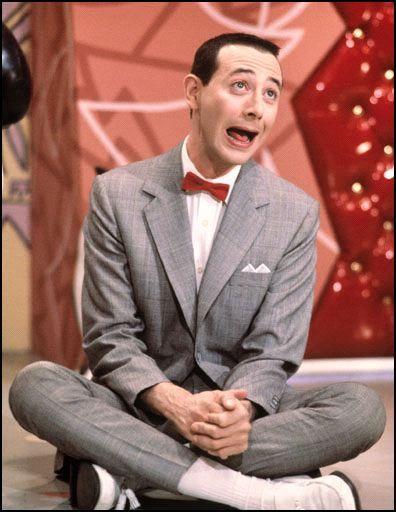
Paul Rubens and other similar-schticked dressers could not have imagined that their parody would become emulated in earnest by those applying their brand of rough-tuning to areas generally off-limits as dictated by the human eye.

The faux-growth spurt look is odd, and is thankfully temporary. If the shortened look hits the wrists, I'll lose all hope. Style and fashion are two different things. Fashion takes style and tunes it, alters it, and repackages it into something that may or may not nod to the original. When "preppy" and "WASP[y]"* became the launching point for a particular fashion trend, it was inevitable that the mark was missed on many points. Observers emulated the color, patterns, materials, and combinations of the look, wrote examinations of the manners and attitudes, and analyzed and documented the customs. While many were VERY observant in their writings, most failed to note that which was NOT done. These young men are shocked and indignant when they are told that while their tweed jacket and club tie are nice, their jeans and sockless ankles will not allow them to remain at the Club (though they are generally allowed to finish their drink, if their host got them that far).


 *Stop trotting out these terms so liberally.