Tuesday, February 22, 2011

Reviving Shirts III - Dr. Frankenshirt

Brooks Brothers/Thomas Pink Merger

An old Thomas Pink shirt of mine was in need of surgery.  While the collar was miraculously in healthy shape, the cuff edges were on the verge of looking like fletching... (Maybe now would be a good time to coin the term "fletched" for worn out collars and cuffs that have gone frayed?  Done.  Fletched it is.)  So the French cuffs were fletched, and in need of replacement.  I also had a Brooks Brothers evening shirt (in perfect condition) that I had just found on eBay for about $5 to put into the black tie rotation.  The solution was simple:  I would create a monster.


Inspired by a friend's double-take-inducing evening shirt in black-watch, I set about combining the two shirts (actually the tailor did... I am devoid of talent) into something that would hopefully accomplish the same thing.  It turned out just as I had hoped.  The marcella bib, collar, and cuffs we all very thick, and the bib was double-layered (creating a near-armored breast plate) on the original evening shirt.  I transferred only a single layer, and it excellently allowed the butcher-check underneath to show through slightly. 

BB bib/cuffs/collar & T.Pink body


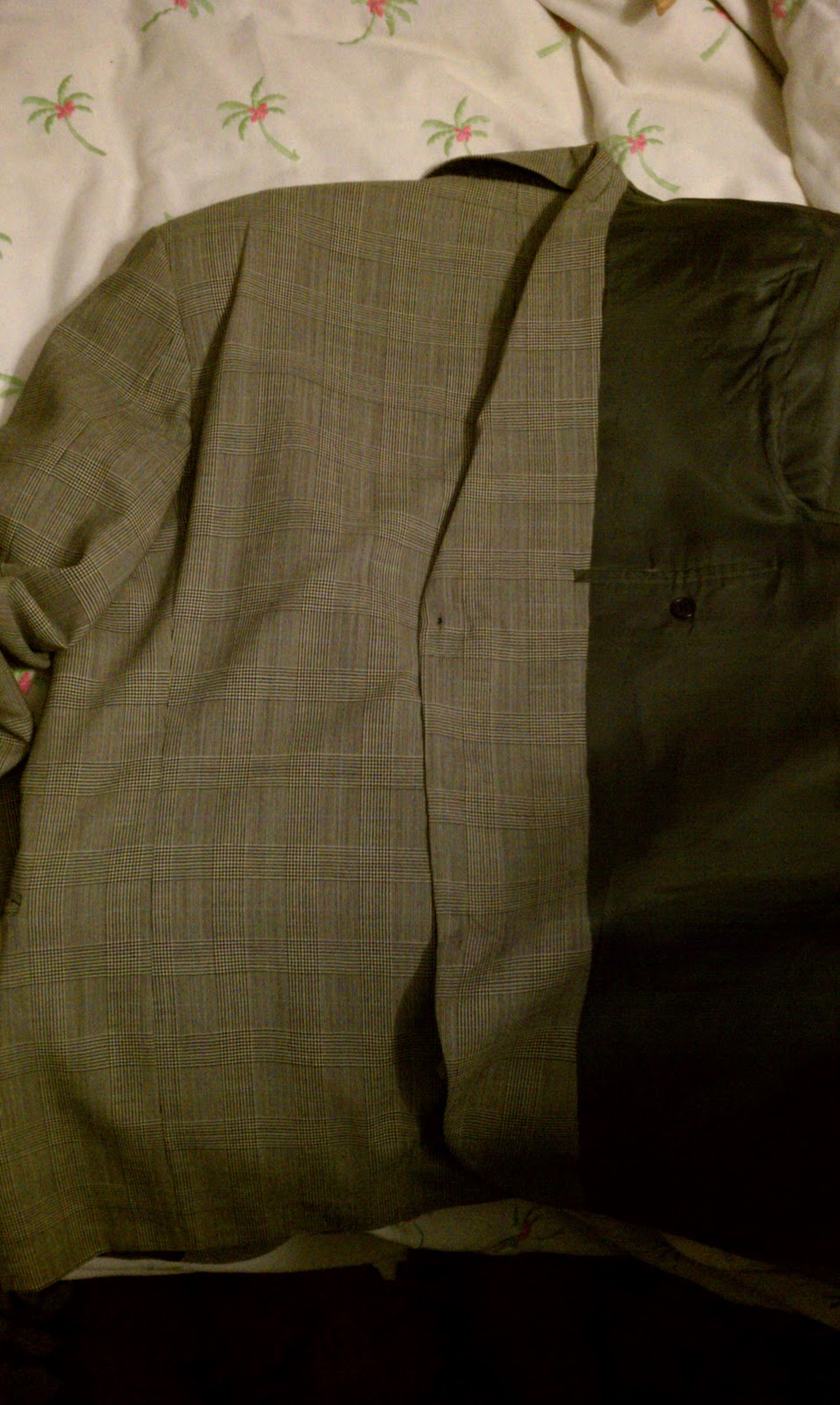
Underneath an older Brooks Brothers dinner jacket (as a then 26-year old, the first one I had ever purchased) with more casual notched lapels, only the bib and cuffs were visible.
Brooks Brothers dinner jacket


Thankfully, the city has no shortage of black tie enforced events, and since dinner jackets tend to not be let off the torso easily, the pattern will be kept hidden away like striped socks... a chance-glance at most.

Reviving Shirts I (the first post) & Reviving Shirts II

Saturday, February 19, 2011

The Ascot

"Dear Yankee-Whiskey-Papa,
I was visiting with my grandfather who is one of the best dressed men I know, and he gave me an ascot of his.  My question is will I look like a jerk wearing it?"

-Joshua


Dear Joshua,
Yes, you will look like a bit of a jerk wearing it, but that is exactly why you should immediately put it on.  It is excellent tribute to the generosity of your grandfather and his style, and it will sharply reduce the number of high-fives offered you.  The majority of people will likely think that you look like a dandy, but the majority of people abhor wearing actual clothing out of doors anyway.  I wouldn't make it a trademark of yours, but certainly put it on at parties, evenings to restaurants, or any other time you please.  You can always start slowly, by keeping it tightly tucked  under the shirt and not billowing up, looking as if your clavicles have vomited silk.

Most come in pointed ends, with pleats around the neck-portion.  These fit very well, but make themselves limited in their application.  If you have a sweater, they can also be used as a tie if you're in a pinch.


I mostly use long silk scarves, rolled or folded, because they can be taken off and given to someone if it's cold, and they tend to be warmer and fuller. 


The patterns on the pre-formed ones are generally conservative.  Avoid solids when possible, and contrary to what many say, stripes are very pleasant.


The open neck looks a bit odd, and reminds everyone that you may likely be someone who speaks loudly on a cellphone before berating the gate-agent about your delayed flight.


A silk scarf can start between the jacket and the sweater or shirt, letting people know that you are stylishly preparing for the evening to cool down.

Between jacket and sweater


Inside the party or during your stroll, the scarf can be worn between sweater and shirt for a more elegant look that is still uncommon enough to be interesting but without all the stereotypical baggage associated.

Between sweater and shirt


Now, there is no turning back.  Once the silk goes between shirt and neck, every hockey high-fiver, blood-thirsty shut-in, 'roid-raging goon, methed-out hayseed, and management-speak spanky will cross the room to make a Thurston Howell joke.  You should have thought of this before you went into Bucky's Sports Bar and Grill dressed in an ascot.

Between shirt and skin


The ascot has been unfairly railroaded into it's stereotype for decades.  It works just as well with jeans, pajamas, or a vest, but always with a jacket.  I say wear it, and nevermind caring what people think of it.  An evening party in the cooler months with a dark velvet jacket and silk ascot somehow makes gin taste better, and a scarf between sweater and shirt is just right for a ride in the convertible or a trip to the library peddling the English three-speed.
 
Leaving it untucked is far beyond the limits of sensible, and advisable only if you are the Amherst-modeled driver of the Mystery Machine.  Zoiks!


Tuesday, February 15, 2011

Reader Submissions: Homemade Pocket Squares


A reader sent a photo of his hand-made pocket square, and the accompanying description.  I truly do love getting photos from readers, especially when they are like this:


 ------


I decided to go with a blue and pink outfit for valentine's day and needed a pink pocket square.


I picked up some "fabric quarters" at the fabric store. I grabbed two pink ones because I didn't know which one was going to work better with the tie I had picked out. Then when I saw them next to each other and remembering the post on [Boxing the Compass] about making your own, I decided to sew them together and I think it turned out quite nice. I did a test with a three-point fold and it looks fantastic.

I'll make sure to grab some photos of the outfit showing off the pocket square and send them to you, too.

I'm hoping to make many more, considering how easy this one was. 

The second one
------ 

Excellent creations, inspiring stylishness, and for little cost.  The double-sided cottons are always eye-catching, and they seem to be catching on. 

Friday, February 11, 2011

The Pointless "Heritage" Discussion, and An Affordable Speakeasy

Avoiding the tedious genealogical discussions and the laurel-resting that accompanies the over-told triumphs and dignities of ancestors past, the assertions about "heritage" as concerns modern clothing is an odd one.  Thankfully, there seems to exist alert skepticism amongst the more observant, and many bloggers and shoppers have correctly resorted to eye-rolling when they see the word fraudulently/laughably printed in a tea-stained font on a beige label.

I suggest the possibility there there is no discussion.  There is only a hopeless and goal-postless pseudo-analysis of the efforts of dubiously appointed/anointed marketing teams to continue to sell clothing.  While it prickles the grounded and leans distasteful, what do we expect?  Suspiciously granted college degrees in modern marketing dogma will ensure that nonsense like this will continually re-appear (but even the most irritating product branditas and branditos are entitled to earn a living for themselves).  


For those interested in a more calming American Heritage lesson (certainly less annoying than mine, and unlike mine, contains actual authority), I suggest the works of Eric Sloane.  A dear friend and then-roommate introduced me to Sloane's work during college, and I have enjoyed it ever since.  Debating about whether or not a particular model of sweater is "authentic" seems a bit irrelevant when you read about snow rollers, apple-butter paddles, and wagon ruggles.  Vapid blogs detailing gagging recipes with preambles such as "My dinner guests were treated to my luxurious citrus and smoked-trout filled mushroom caps" are compared with Sloane's appendices listing recipes for mead, sillibub, haymaker's switchel, and several formulations for homemade paint.


The man traveled the country documenting American tools, customs, techniques, lives, and creations, drawing rich and readable diagrams supplemented with descriptions that make the back and hands ache and one's own list of preoccupations get chipped down to cushy nuisance.  Ink drawings of extinct architecture, charts of now long-rusted away iron tools, and methods for surviving that live only in the frail pages of decaying letters are all captured and preserved in his work.

I grew up laying claim to my beloved New England as the home of the covered bridge.  Sloane's gorgeously self-illustrated 1954 book American Barns And Covered Bridges provides a back-page census of covered bridges from that year's summer.  Fulfilling our assumptions, Vermont had 121 covered bridges, but surprisingly, Indiana had 174.  Ohio... 349.  The Main Line Sportsman's predecessors enjoyed 390 covered bridges.


Because the heritage discussion is debated from every point on the compass, I am suggesting that Sloane provides the only approachable and legitimate starting calibration for such a thought exercise, should it occur at all (and it should not).  Taking a step back, though... like many terms (and popular abbreviated ones) the entire discussion exists only in the hunched and furiously key-pecked world of blogging, where people with no credentials (myself certainly included) can postulate and opine on the most granular word-play... or just as easily watch a video of some dog riding a skateboard.

---

As I reached the completion of writing this, none other than An Affordable Wardrobe's Giuseppe Timore appeared in the doorway to shake off the winter's chill with a glass of brandy*, and we immediately retired to Boston's hardest-to-find speakeasy.  Interestingly, we both happened to be wearing shortened club collars and striped ties.

YWP & G.T. elbow the bar.  Two additional guests (not pictured) joined, and took this photo


Heavy gray pressed flannel pants, navy blazer, highly polished brown wingtips, and his pinned collar were all wrapped in a handsome cashmere overcoat.  There are those about whom one can say "their clothes wear them", but Giuseppe not only wears his, he seems to be in absolute command of his clothing.  He is intentional and certain, fully at ease in them, and best of all, somehow without a single trace of preoccupation (which is strange given the regularity of articulation in his blog).


As usual, he was impeccably assembled, and at what was likely a sinister bargain.

*Avoid drinking brandy from a snifter.  Everyone serves it that way, but the encapsulated vapors in the fishbowl immediately anesthetize the nose, deadening one's ability to taste.  Any flush or opened-top glass works very well.


Wednesday, February 9, 2011

Urban Practicality: Repurposing Objects for City Houses


Straying from clothing for a moment... practicality and style can work hand-in-hand. If done poorly, they are in spite of one another, and it's usually tiny areas of the house where they are working together, making life easier or at least slightly more enjoyably odd.

A trout net on deep clearance from Orvis now holds fruit up and off the pantry counter (and cooled in winter by the courtyard's hopelessly drafty window).


A dab of sticky-putty un-damagingly holds a cheap clothespin to the cabinets in the kitchen (intended as temporary... but still there) to hold grocery lists, printed recipes, etc.


An oversized $5 ladle from a restaurant supply store in Chinatown holds up to $40 worth of spare change.


An old deep-sea lure with the hooks filed dull now holds keys.


A restaurant's slotted spoon is bent into a "Z" and keeps pot-scrubbers high and dry near kitchen sinks.


12 cheap darts are used to hold olives into a (10 ounce!) Martini glass, circa 1940.  7-8 ounces of gin and needle-sharp hand-missiles... how could this possibly go wrong?


A souvenir mortar* from a childhood field-trip to Appomattox now sits on a cheap cork coaster as a rest for an active fountain pen.


In my travels, I've found a men's tailoring shop that dispensed brass buttons from a gumball machine, an old tall-standing Jøtul wood stove that now serves as a liquor cabinet, and a delicate paper parasol that softened previously harsh lighting in a converted loft.  Simple, cheap, creative, unique, memorable, and thoughtful.  While drastic repurposing is often not available for a gent's clothing (one wouldn't swap a waistcoat with a life-vest under a suit), subtlety is explorable, and the mark of good style... with some inevitable and forgivable failures.

*Originally listed as "cannon" by YWP, correctly corrected by JKG.

Sunday, February 6, 2011

Urban Practicality (Ladies' Edition): Rain Skirt

Griping about the weather and the Celtics/Bruins/Patriots/Red Sox is one of the more tedious methods by which some New Englanders attempt conversation.  The local news has ensured that our courage-producing organs are effectively shriveled, and our political leaders tell us to stay home when it snows (these are people who get paid -by taxpayers- regardless of whether or not they show up).
For the rest of the city, clients still need advisors, committees still need to meet, children still need daycare, and all manner of business still must happen.  In the city, everyone walks.  Even a few blocks to a subway can drench or sleet-fill clothing if the weather is foul.

Wife Dearest has a strong aversion to cold air and anything cold falling from it.  Her raincoats got longer and longer, and her wellies got taller and taller, but she would still arrive with the elements having found their way through her coat and breaching the boot-tops.  Reaching her office/appointments/parties/meetings feeling disheveled, soaked, and having all prior preparations ruined can now be avoided.

When the weather reaches a level which provides genuine and substantial threat to her put-togetherness, in addition to her raincoat, and over her existing dress or skirt, she puts on a rain skirt.

Rain Skirt

A lightweight breathable over-skirt that velcros around the waist, and has a midway fasten provides a guaranty of a dry arrival.  Unlike 99% of outdoorsy "technical" clothing, it is actually flattering to the female form.  In fact, the old Saville Row and Jermyn Street clothiers also made waterproof clothing for the boys in the trenches during World War 1, and one advertised substantially for womens' waterproof over-trousers, which were similar to very baggy plus-fours.  I have an old vintage magazine ad featuring it... somewhere.


A dress or outfit of any sort is kept dry and safe by the over-skirt/wrap.


Under a long raincoat or even a shorter parka:


It provides enough extra length to close the boot/coat gap.


A brisk twenty-five minute stroll or trudge through the city is made painless, and more importantly, her arrival is kept comfortable.  Rain-pants look terrible on women, but are also very uncomfortable for walking.


An LL Bean Jones Cap (in ladies SMALL).


Waterproof, wind-proof, weather-proof, and still perfectly maneuverable.  Best of all, she doesn't feel like a camping store blob, or look like of the many tourists who outfit themselves for a walk through the city like they're running the Eco-Challenge.  With this one, its removed in seconds, and stows away easily its own pocket once one has reached their destination.


The wrap works beautifully for canoeing and hiking, and if the weather is mildly bad, they can serve as a placeholder for foulies when it's not likely to remain ugly out for too long.  She has found it perfectly comfortable and fully effective while indulging me in trout trickery, coastal sailing, or a stroll through the city during blizzards, and she doesn't have to sacrifice her style.

Emergent Designs has picked up this post as well.

Thursday, February 3, 2011

Smart and Stylish Mention

The proprietor at An Easy and Elegant Life nominated this blog for recognition as “Smart and Stylish”. Boxing The Compass is admittedly comparatively bland, and his bestowed adjectives were either a surprisingly charitable mention, or a mistakenly-linked redirection perhaps intended for a blog covering ACTUAL compass navigation.  There’s no deviation like magnetic deviation, I've always said... give or take 16 degrees. 


All cheek aside, I sincerely thank him for his courteous nod, and handsome manner with which he composes his emails.


I was asked to write seven things about Boxing The Compass that are not known.


1. I wear a coat and tie (or a clearly non-business suit) while vacationing in cities, and always during transportation.  I do this not for vanity, but because the rest of the world deals with suspicion by drenching it in courtesy.  In the US, we often deal with it by being jerks (which is appropriate).  Cheap move?  Perhaps, but I end up getting seated and served first and (in the East) I don't get inflated prices.  Train ticketing clerks and on-board rail staff also tend to lavish disproportionately attentive service to those who provide them with some aesthetic nostalgia.


2. Since age 10, I’ve held the club record for “most years of tennis lessons with least visible improvement”.


3. I think that terms like “WASP” and “Preppy” are best only uttered sotto voce.  Seriously.  Consider immediately renaming your blogs.  The twist (and this is the good part) is that by blogging about how well you are pulling it off, you disqualify yourself by breaking the golden rule.


4. “Boxing The Compass” began as a (de facto) private discussion forum amongst friends.  It was on blogspot, and I started getting email questions from people who somehow found it.  It grew from there.


5. I’m overcome with a disproportionate sense of productivity when my stapler runs out of staples.


6. I write left-handed, throw right-handed, played lacrosse with both, and can’t play the piano with either.


7. During warm months at 5pm, we fly a cocktails flag outside of our city house, and welcome in for drinks anyone who presses the bell... anyone... which has been interesting.  I am the sixth generation to conduct this strange tradition, though the original burgee didn’t make it past the second.


---A thank you to the readers in Australia for your very nice emails and photos. 

Monday, January 31, 2011

Fast & Compact Packing for Travel

How to fold a suit / how to pack a suit

 Airline offers passenger dignity, passenger is respectful.


When nothing is offered, nothing is given.*

Packing for a trip (of any duration) can be tricky, but I've found that the shorter trips (1-3 nights away) require particular attention.  For those who pack suits or jackets and pants, the method by which you pack begins with your luggage.  If you carry a garment-fold-style device, you will pack your clothing exactly as they hang in your closet, hangers and all.  If you choose a suitcase or an overnight bag, you can still pack a decent amount that will emerge ready to wear.

Up until about two years ago, I laundered and pressed my own shirts.  Now, I take them to the dry cleaner for the same.  The amount of space required to hang up a number of shirts is deceptively consuming, and the frequency of traveling brought me to a final logical conclusion.  Now, for about a nickle more, I have the dry-cleaners fold each shirt, and they are ready to either be worn, or dropped into a bag for a trip.  For folded shirts, shelves or drawers are the holding method, and not a hanging bar.  They require a fraction of the space that hanging does, and despite what some say, they ARE ready to be worn out of the bag.  They are carefully folded around a rectangle of cardboard, and often in plastic. *** For the record, I save the cardboard and the plastic, and hand them in with the next delivery of shirts, to be used again.***  When it's time to pack, you can throw pre-folded shirts into a bag like soup cans into a grocery basket.


For each shirt, pack in a tie, pocket square, and cuff-links.


Then fold your suit. Start with your jacket.


Turn the jacket face down, and reverse one of the shoulders, as below:


Now, drawing a center line down the rear spine of the jacket, fold the other (unreversed) shoulder into the reversed one.


Next, as shown below, the shoulders are cupped together, and the button and button holes are face-to-face (or "kissing" as many tailors say).  Fold this whole assembly again along the rear spine (half-way mark) of the jacket, which occurs almost automatically.


The jacket can be folded to half horizontally.


Fold the trousers to quarters, and place on top of the jacket.  With the pre-folded shirt package and its contents, and you can use a surprisingly small day bag.


There is no magic to the method.  If you prefer to try it yourself, invest $1.50 - $2 at the local cleaner, and ask for the shirts folded, and dissect and reverse-engineer the exact technique.  Fold them around a similar sized piece of cardboard, and remember that the cardboard can easily be slipped out of the folded assembly... it is not required to accompany the shirt.

Also note that many dry-cleaners fold and box shirts as well.  While this may be a good idea for formal shirts that see only occasional use, a simple cover or paper band will do... don't get too fancy.


*First class cabin. Thanks to theambershow for capturing this.

Friday, January 28, 2011

Urban Practicality: Cassette Holder = Tie Rack


A local used record store was going out of business, and I'm apparently the only person in the city who feels that a cocktail party is best paired with 1960's Bossa Nova on vinyl, because the records were in abundance at $1-3 a piece.  Bossa Nova, laughter, and smoke (acceptable then) would waft up the stairs to where the children would sneak over and sit in pajamas, listening to scandalous gossip/implausible anecdotes from well-dressed guests, occasionally receiving an illegally diverted platter of sandwiches or small cakes.


The records aside, my best find was an old cassette holder which displayed all genre of tape in the rear of the shop.  I asked the manager if it was for sale, and he thought for a moment, and finally answered "Um... sure.  Ten bucks?"  Yes... ten dollars will be fine.  I had already un-run my tie to fold it and take measure, which worked.  I carried the awkward and foolish hunk of oak (yes, oak) and hardboard home, and threw some of my ties into it.  Softly folded to halves four times, they fit well. 


I decided not to remove the "ROCK" label that the record store had pasted on to tell browsers where they could find Van Halen and Rose Tattoo cassettes within the shop.  It was a nice reminder of the origin.


Mounting it on the wall is tricky, because it is pretty heavy, and a strong cleat will be needed to actually hold it up, but the ties are none the worse for the gentle folding they get, and it actually looks pretty nice.


If you have a large number of ties, it won't hold all of them, but in terms of economy of space, it can't get much better.  Bowties are obviously exempt from the practicality of this holder, but they occupy far less of the precious urban indoor real estate to begin with.

I have spent far too long experimenting with every manner of tie holder, from wagon-wheel-style spokes to rotating wooden dispensers... none of which worked for me.  Generally, the thrift shop shopper or thrifty shopper has a larger selection of ties than most men under fifty years old, so why not turn your ties into a functional sculpture? 

Thursday, January 27, 2011

Burns Night Supper & Ceremonial Scottish Dress


"We all know that Robbie Burns was a famous Scottish womanizer and tax-collector, but did you know that he also wrote poetry?"

Every year, on or around January 25, clubs and families all over the world celebrate the great works and spirit of Robert Burns, who was unfortunately born in the cold depth of winter, making the journey to the event... um... quite bracing.

The evenings are not necessarily full of kilts, as most guests generally opt to wear smaller tartan of some sort.  The organizers can offer anything from a simple toast to the poet, to a full ceremonial evening with rivers of whisky and hills of haggis.

Our event (above) saw only three kilted gents, while the rest opted for tartan ties, tartan suits and jackets, scarves, skirts, thistle pins, etc. The gent on the left is wearing his black tie, and he has excellently and staunchly refused to purchase a dinner jacket and trousers, correctly reminding the inquisitive that his kilt and Bonnie Prince Charlie jacket are formal, thank-you-very-much.

What should I wear to a Burns Night Supper?


The answer is, whatever you want.

Outside of a Burns Night Supper, kilts are a tough angle, though.  One can get deeply into the realm of costume very quickly.  As everyday wear (in the US), they are a sure ticket to the kooky end of the eccentric spectrum.  Occasional use, such as hiking, spey-casting, in-field shooting, etc. can be pleasant in one. They are always correct during ceremonies though, and they are not unfamiliar sights at weddings, funerals, or black-tie events, especially in Georgia, the Carolinas, and the more maritime areas of Canada or any Caledonian Club of [insert city/country name] around the world. 


Can I wear a tartan that is not mine?


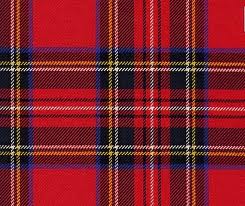
Of course.  If not, the Stuart Clan (above) has a LOT of complaining to do, and lumberjacks all over will have to make a genealogical case as to their decendency from Rob Roy.  Find a tartan you like, and wear it.  If someone asks you if you are of that family or clan, you need only explain that you wear it as tribute.  If you are questioned further, ignore them and find someone better to talk to.  In the US, you can always play it safe and go with understood-as-neutral Black Watch:


I still see guys wearing the "work" or "sport" kilts, generally on college campuses, usually monochromatic and paired with a black undershirt depicting a band of some kind.  I think people should wear whatever makes them happy, but that is a look that is not for me.

As for the other question that people always ask concerning kilt, I suggest you research it for yourself.